LANDS ON THE MOVE

LANDS ON THE MOVE

LANDS ON THE MOVE

LANDS ON THE MOVE

LANDS ON THE MOVE

LANDS ON THE MOVE

LANDS ON THE MOVE is a research platform inquiring the mobile phenomenon of the territory, constantly appearing and disappearing while acting as significant environmental shaping factors.

The platform addresses territory as layers of intertwined complexities continuously transforming in space and time that are crossed, traced and modified by grounded practices and their experiential performances. We are deeply interested in the spatial dimension of the conflicts that emerge from these processes of overlapping. With a multidisciplinary approach, we combine observation, documentation, and representation and elaborate on methodologies to enable inevitable social, cultural, and spatial consequences of frictional dynamics.

The platform sees the possibility of working in contested territories through the ephemeral characteristics of the places that embody a register of the memories and future potentialities within the transient state of becoming. 

RESEARCH
RESEARCH
RESEARCH
RESEARCH
RESEARCH
RESEARCH
RESEARCH
RESEARCH
RESEARCH
RESEARCH
RESEARCH
RESEARCH
RESEARCH
RESEARCH
RESEARCH
RESEARCH
RESEARCH
RESEARCH
RESEARCH
RESEARCH
RESEARCH
RESEARCH
RESEARCH
RESEARCH

Lands on the Move considers the landscape as a series of stratified layers—temporal, cultural, political—whose composing, shaping, and influencing phenomena often bear fleeting, transitional qualities. The result is a complex, living spatial archive perpetually in flux.

Particular attention is given to the territory’s dynamic, “on the move” aspects: traces, memories, and material fabrics of interrelations that unfold across broad timeframes. These layers record everything from ancestral pathways and forgotten settlements to urban expansions, inglobing infrastructures and emerging land uses, creating a palimpsest of human intention and natural process.

While every landscape element offers a potential reading or interpretation of context, it is the temporary manifestations—those deep imprints left on land, on territory, and on its human and non‑human inhabitants—that spark our curiosity for the mnemonic dimension of place. Whether it’s the ephemeral patterns traced by seasonal flock movement, the geopolitical shifts forming borders, or the cultural rituals that momentarily reconfigure space, these phenomena invite us to consider the spatial consequences of temporal inscribing the permanent.

These transient events drive us to investigate the interplay of natural forces, geopolitical events, lifeways, and climate dynamics that radically or invisibly transform any given territory. By tracing these movements— spatial or cultural, sudden or gradual—we aim to reveal the hidden narratives that make every landscape an ongoing story of becoming.

REGISTER
REGISTER
REGISTER
REGISTER
REGISTER
REGISTER
REGISTER
REGISTER
REGISTER
REGISTER
REGISTER
REGISTER
REGISTER
REGISTER
REGISTER
REGISTER
REGISTER
REGISTER

The collection of the outcomes of the research activities—archived within the platform’s Register— embodies both the present iteration of inquiries and the impetus for future explorations. Rather than conforming to a singular medium, the Register presents a polyphonic tapestry of expression: layers of cartographic and photographic evidence converse with immersive audiovisual pieces, while critical reflections on geopolitical shifts resonate alongside installations that animate the interstices between natural processes and human agency. In this way, each entry transcends its medium, inviting viewers to apprehend how memory, materiality, space and power intersect within contested landscapes, and to draw from these interwoven narratives questions for future explorations.

This diverse collection advocates for a polyphonic transmedial approach to frictions, marginal territories and multi-scalar landscapes. Each output is related to the specific cultural and material conditions of sites, collaborators, partners and themes.

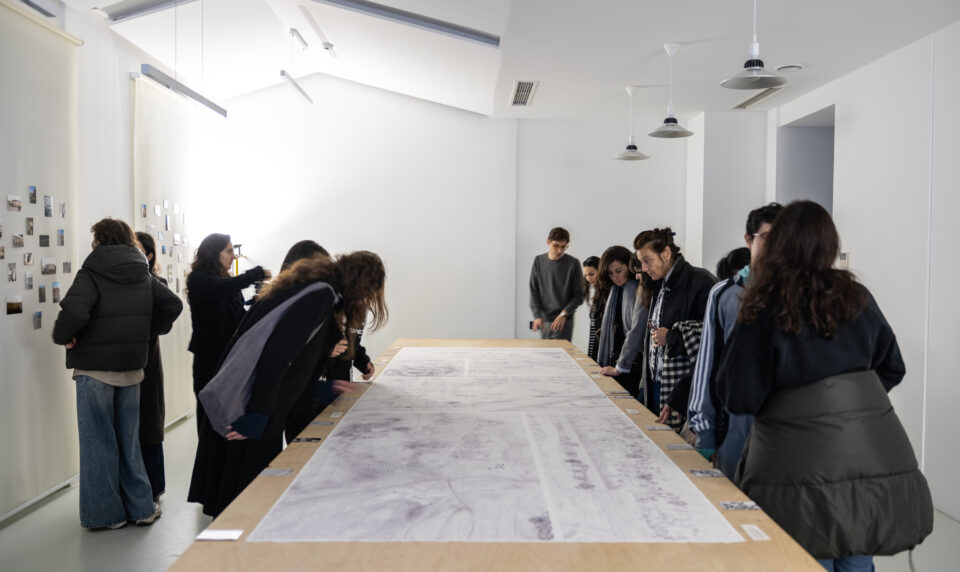
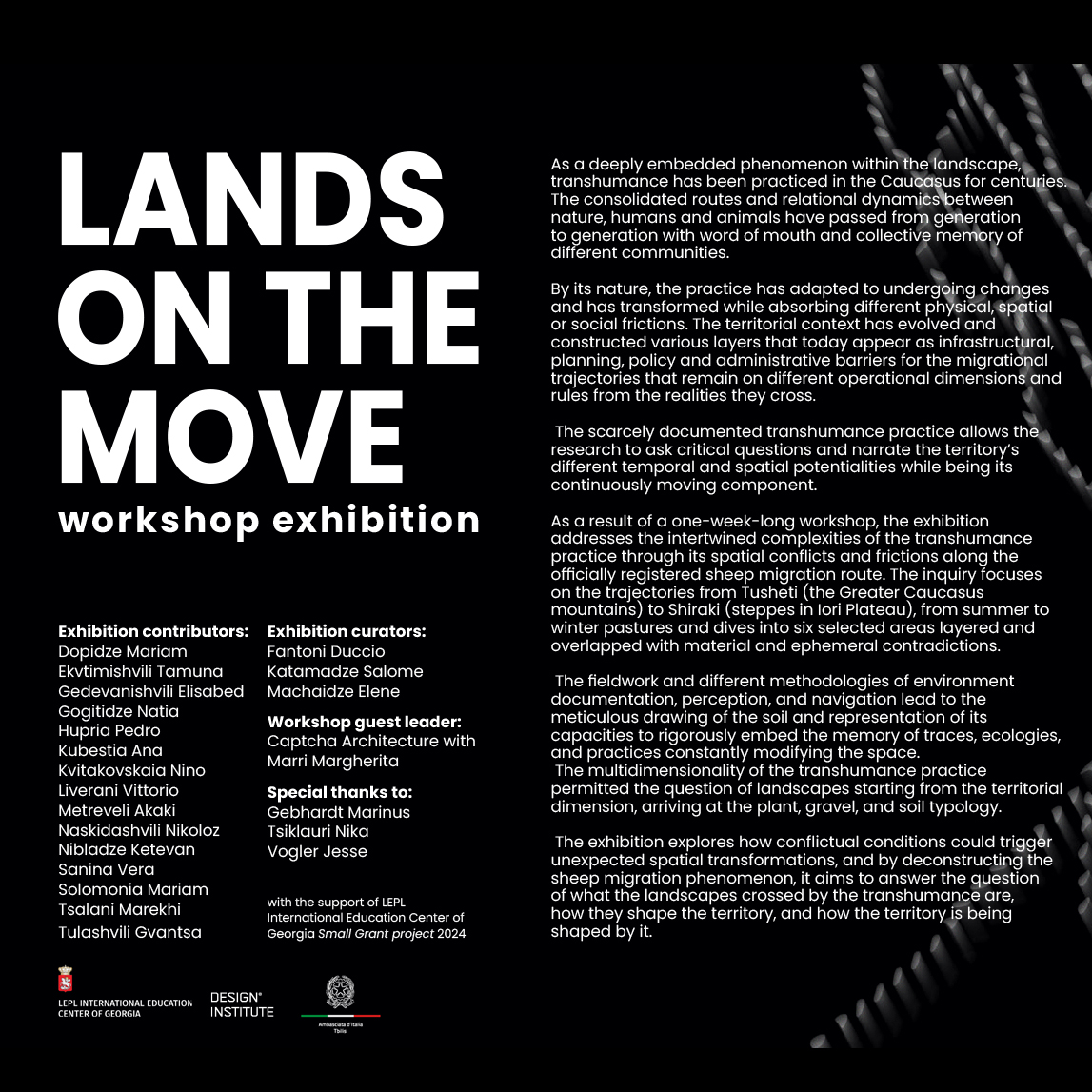
LANDS ON THE MOVE Workshop Exhibition

ArtefactsEvent

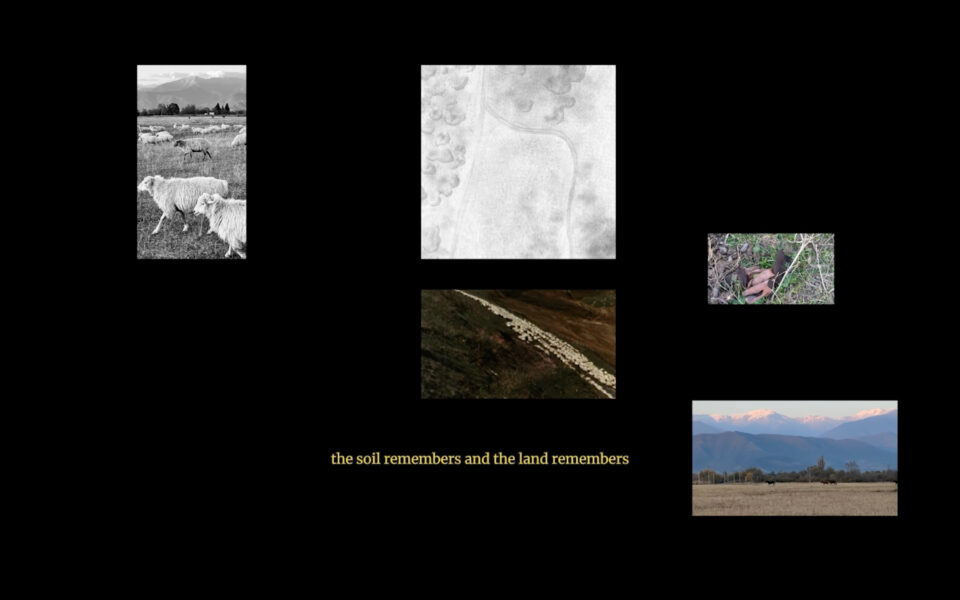
Transhumance Landscapes

ArtefactsLOM workshop - collective mapping

Phenomenology of (in)visible

ArtefactsCollective multimedia

Crossing

ArtefactsTbilisi biennial of Architecture
EDUCATION
EDUCATION
EDUCATION
EDUCATION
EDUCATION
EDUCATION
EDUCATION
EDUCATION
EDUCATION
EDUCATION
EDUCATION
EDUCATION
EDUCATION
EDUCATION
EDUCATION
EDUCATION
EDUCATION
EDUCATION
EDUCATION
EDUCATION

The inquiry primarily focuses on the mobile phenomenons of the territory, constantly appearing and disappearing while acting as significant territorial shaping factors.

The spatial understanding of the surroundings can not be merely connected to the metrically measurable and effortlessly visible circumstances. The research observes layered complexities of territory so firmly intertwined with each other and, in the process, elaborates on methodologies to render visible the inevitable social, cultural and spatial consequences. cultural and spatial consequences.The spatial understanding of the surroundings can not be merely connected to the metrically measurable and effortlessly visible circumstances. The research observes layered complexities of territory so firmly intertwined with each other and, in the process, elaborates on methodologies to render visible the inevitable social, cultural and spatial consequences.

ON THE MOVE
ON THE MOVE
ON THE MOVE
ON THE MOVE
ON THE MOVE
ON THE MOVE
ON THE MOVE
ON THE MOVE
ON THE MOVE
ON THE MOVE
ON THE MOVE
ON THE MOVE
ON THE MOVE
ON THE MOVE
ON THE MOVE
ON THE MOVE

The inquiry primarily focuses on the mobile phenomenons of the territory, constantly appearing and disappearing while acting as significant territorial shaping factors.

The spatial understanding of the surroundings can not be merely connected to the metrically measurable and effortlessly visible circumstances. The research observes layered complexities of territory so firmly intertwined with each other and, in the process, elaborates on methodologies to render visible the inevitable social, cultural and spatial consequences.The spatial understanding of the surroundings can not be merely connected to the metrically measurable and effortlessly visible circumstances. The research observes layered complexities of territory so firmly intertwined with each other and, in the process, elaborates on methodologies to render visible the inevitable social, cultural and spatial consequences.The spatial understanding of the surroundings can not be merely connected to the metrically measurable and effortlessly visible circumstances. The research observes layered complexities of territory so firmly intertwined with each other and, in the process, elaborates on methodologies to render visible the inevitable social, cultural and spatial consequences.

The territorial testimonies

Telavi - Bakurtsikhe - Dedoplistskharo

The presence in the absence

Tianeti - Akhmeta - Shakriani - Telavi

The vineyard grazing

Gujaani - Kondoli - Napareuli - Alaverdi

Collecting the traces, registering the memories

Tianeti - Akhmeta - Omalo

Sedentary nomadism

Tetri Tskharo

Common places, contrasting communities

Marneuli - Bolnisi - Darbazi

LANDS ON THE MOVE is a Tbilisi-based research platform established in 2024 by Duccio Fantoni, Salome Katamadze, and Elene Machaidze as a grant-awarded initiative supported by the LEPL International Education Centre of Georgia. Rooted in a commitment to spatial research and advocacy, the platform also foregrounds educational engagement through workshops, seminars, and public lectures. Central to its mission is cultivating collective knowledge production and experimental methodologies attuned to the spatial and cultural tensions shaping contested and marginalised territories.

Embracing a multidisciplinary ethos, LANDS ON THE MOVE operates at the intersection of inquiry and practice. By fostering dialogue among scholars, stakeholders, students, and collaborators, the platform constructs an open framework for the critical interpretation of space, one that resists static readings in favour of dynamic, situated reflections. This approach enables operational and speculative responses to territorial transformations, positioning the platform as a site of generative experimentation within complex socio-political and ecological landscapes.

Duccio Fantoni

Duccio is an Architect, co-founder of NOIA practice, Architecture and Landscape office active in Italy and Georgia. Currently a PhD candidate in Politecnico di Milano at the Department of Architecture and Urban Studies, where he explores transient spatial phenomena as transcultural agents, from the scale of buildings to the territory.


Salome Katamadze

Salome is a Georgian-born Architect based in Milan (IT); her research interests focus on the physical and cultural transformation of the landscape in the contested border territories and the interaction of political power domination on the unbuilt environment. Since 2022, she has been a PhD candidate in Urban Planning and Design Policy at Politecnico di Milano. In parallel with the research, she is a co-founder of an Italian-Georgian Architecture office, NOIA practice.


Elene Machaidze

Elene is an Urban Planner, currently operating as an Urban Planning Consultant at the Spatial and Urban Development Agency. She holds a Master’s Degree in Urban Planning and Policy Design from Politecnico di Milano. Her private sector professional experience covers architecture and urban planning projects.

LANDS ON THE MOVE has been supported by LEPL International Education Centre of Georgia, Embassy of Italy in Tbilisi, and Design Institute.


For any further inquiries, possible collaborations or curiosities, do not hesitate to contact: info@landsonthemove.com

LANDS ON THE MOVE

error: